
Few companies have had such a powerful and transformative impact on the history of video games as Sony. Originating from the world of consumer electronics and audiovisual entertainment, its entry into the industry came later than others but it was decisive. In a market already dominated by established giants like Nintendo and SEGA, Sony not only found its place, but redefined the rules of the game from its very first move.
What began as a failed collaboration with Nintendo evolved into a quiet revolution: the arrival of the first PlayStation in 1994 marked the beginning of a new era. From that point onward, each generation became another step in the consolidation of a brand that understood video games as culture, spectacle, and industry.
The journey has not been without challenges. Identity crises, risky product launches, and the end of its handheld adventure proved that even at the top, balance can be fragile. Yet Sony has continued to adapt, exploring new business models, connected services, and transmedia strategies that extend its legacy beyond hardware.
This is the story of how a Japanese electronics company became one of the fundamental pillars of modern gaming.
1. From electronics to video games (1946–1994)
The origins of Sony, its technological evolution, and the path that led to its break with Nintendo.
Before dominating the world of video games, Sony was already a major force in consumer electronics, music, and entertainment. Its path toward interactive leisure was neither immediate nor obvious, but the result of decades of technological innovation, strategic decisions, and an unexpected rupture with what was meant to be its first major partner: Nintendo. This section explores the company’s early years, its rise as a global reference, and the moment when, after a historic disagreement, Sony chose to pursue its own console, a decision that would change the industry forever.
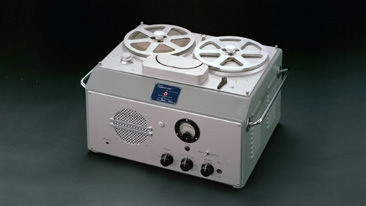
Image credit: Cjchunt (Wikimedia Commons) – CC BY-SA 4.0 – Image not modified.
The origins of Sony and the path toward PlayStation
· From a Laboratory to a Technological Powerhouse
Sony was founded in 1946 as Tokyo Tsushin Kogyo (Tokyo Telecommunications Engineering Company), a small laboratory established by Masaru Ibuka and Akio Morita with the goal of developing electronic products in post-war Japan. In its early years, the company focused on repairing radios and manufacturing measurement equipment, but its true transformation began in 1958, when it adopted the name Sony, seeking a modern and globally recognizable identity.
· Pioneering innovation and diversification
Throughout the 1960s and 1970s, Sony became synonymous with technological innovation. It was a pioneer in Japan in licensing and applying transistor technology, driving the rise of portable radios. It introduced the Betamax cassette format, revolutionized personal audio with the Walkman in 1979, and expanded into sectors such as music, film, and computing. This multidisciplinary approach created a diverse corporate structure, with divisions spanning hardware production and content distribution.
· First contact with video games
Before developing its own consoles, Sony already had a presence in the video game industry, though in a peripheral role. It manufactured displays for arcade machines and sound chips for consoles such as the Super Nintendo. It also briefly explored the home computer sector through the MSX standard in the 1980s, collaborating with other Japanese companies, although without a leading role.
· The Nintendo project and the historic rupture
In the late 1980s, Nintendo selected Sony to develop a peripheral that would allow CD-based games for the Super Nintendo. This agreement led to the Play Station project (written as two words), a hybrid machine designed to support both cartridges and CD-ROM. However, contractual disagreements and Nintendo’s concern over control of the format resulted in an unexpected break.
At CES 1991, Nintendo publicly announced its partnership with Philips, leaving Sony out of the project. Rather than abandoning the idea, Sony turned the rupture into an opportunity: it transformed the project into a completely new console, independent from Nintendo, with its own vision of video games as a multimedia product.
· The path was set
This became the turning point. With decades of technological experience, financial strength, and deep knowledge of the audiovisual industry, Sony was ready to move forward on its own. In 1994, PlayStation was born, a console that not only marked Sony’s debut in the video game industry, but also the beginning of a new era.
“Sony moved from manufacturing technology for others to shaping its own destiny in video games.”
2. The CD revolution (1994–2000)
PlayStation and the arrival of a new player that changed the rules.
After decades dedicated to consumer electronics and technological development, Sony decided to enter the video game industry with a proposal of its own. Its first home console, the PlayStation, did more than mark a generational shift: it transformed the public perception of video games and established the company as a central player in the new digital era.
The birth of PlayStation and the paradigm shift
· A rupture that ignited the spark
The origin of PlayStation traces back to a failed agreement with Nintendo, with whom Sony was developing a CD add-on for the Super Nintendo. After the abrupt end of this collaboration, Sony chose to move forward alone and turn that experiment into its own platform. Thus, PlayStation was born, debuting in Japan in 1994 and reaching Western markets in 1995.
· The CD as the spearhead
Unlike its competitors, Sony committed to optical media from the very beginning. The CD-ROM offered greater storage capacity, lower production costs, and richer audiovisual experiences. This decision attracted numerous developers, who found in the console an accessible architecture and a less restrictive distribution channel.
· A brand with identity
PlayStation quickly positioned itself as a product aimed at teenagers and adults, breaking away from the child-oriented image still associated with other brands. With bold advertising campaigns, sleek industrial design, and the release of more mature-toned games, Sony successfully differentiated itself and built a new identity in the sector.
· A catalogue that defined a generation
Titles such as Final Fantasy VII, Metal Gear Solid, Resident Evil, Gran Turismo, and Tekken 3 marked a turning point. Sony offered not only competitive hardware, but also a library of games that was diverse, ambitious, and technologically groundbreaking.
· PocketStation: the first portable step
In 1999, exclusively in Japan, Sony released the PocketStation, a small portable device with an LCD screen, buttons, and memory functions. It allowed interaction with certain PlayStation games by transferring data or minigames, such as in Final Fantasy VIII or Ape Escape. Although its impact was limited, it represented an early attempt at portable expansion within the home console ecosystem.
· An unbeatable debut
By the end of its commercial life, the original PlayStation had surpassed 100 million units sold, becoming the most successful console of its generation. Sony had not only established itself as a new player, but as the driving force behind the paradigm shift toward optical media and video games as a fully-fledged cultural experience.
“With its first console, Sony broke the mold and turned video games into mass culture.”
3. Total consolidation (2000–2006)
A console that conquered the world, as video games became pop culture.
Sony had not only entered the industry it had redefined it. After the success of the first PlayStation, its next step was more than an evolution: it was an unstoppable consolidation. While Nintendo was still processing the transition to 3D and SEGA struggled to stay afloat, Sony achieved something unprecedented: turning its console into the entertainment center of an entire generation. At the same time, it entered the portable market with a device whose capabilities were, until then, unthinkable for a pocket-sized system.
3.1. PlayStation 2: absolute dominance
In the year 2000, Sony launched the PlayStation 2, its second home console. From its announcement, the system generated massive anticipation. It not only promised superior graphical power, but also introduced a revolutionary feature for its time: DVD playback. At a moment when standalone DVD players were still expensive, the PS2 became an affordable gateway into digital cinema… in addition to playing video games.
· A global machine from day one
The PS2’s sober and elegant design, its backward compatibility with the original PlayStation catalogue, and an aggressive global distribution strategy laid the foundation for its instant success. Sony left nothing to chance: it secured agreements with third-party studios, strengthened internal development, and launched the console ahead of its competitors.
· A legendary catalogue
With more than 3,800 titles, the PS2 offered one of the most diverse and successful game libraries in history. From technical showcases like Gran Turismo 4 or Final Fantasy XII, to experimental gems such as ICO or Katamari Damacy, the console had it all. Franchises like God of War, Devil May Cry, Jak and Daxter, Ratchet & Clank, and Kingdom Hearts were born or consolidated on this platform.
· Control, networking, and refinement
The PS2 retained the DualShock controller as the cornerstone of its control scheme, refined with vibration and analog sticks. It also included an Ethernet port, a revolutionary feature at the time although online gaming was still in its infancy. In 2004, Sony released the PS2 Slim, a thinner and quieter revision with an internal power supply, helping extend the console’s lifespan for many years.
· Numbers that made history
The PlayStation 2 sold more than 160 million units, becoming the best-selling home console of all time. Its longevity was such that it continued to receive official game releases until 2013, more than a decade after its debut.
“Sony did not just win the generation: it defined it. With the PS2, video games stopped being just a hobby and became part of popular culture.”
3.2. PSP: the great portable bet
While reigning in living rooms, Sony decided to take its battle to another front: the portable arena. In 2004, it unveiled its first handheld console, the PlayStation Portable (PSP). Unlike its competitors, the PSP did not imitate what already existed it embraced a premium design, a widescreen display, and a multimedia concept that fused music, film, and gaming.
· A handheld on another level
The PSP could play videos, music, and display photos. Its 4.3-inch TFT screen delivered visual quality unprecedented in the handheld market. Its UMD (Universal Media Disc) drive was a bold bet, offering both games and movies in a proprietary optical format.
· A solid and mature catalogue
Sony succeeded in bringing key franchises to its new format:
- God of War: Chains of Olympus, Crisis Core: Final Fantasy VII, and Gran Turismo delivered experiences comparable to home-console quality.
- Additionally, series such as Monster Hunter, Lumines, and Patapon defined an era and built loyal communities, especially in Japan.
- Its more teen and adult-oriented approach allowed it to compete in a different niche from the Nintendo DS.
Revisions and hardware evolution
Sony released several models throughout its lifecycle:
- PSP-1000 (2004): solid build quality, but limited battery life.
- PSP-2000 and 3000: lighter designs, improved screens, and better connectivity.
- PSP Go (2009): digital-only redesign without UMD drive, featuring internal storage.
- PSP Street (2011): low-cost version without Wi-Fi, aimed at emerging markets.
· Global reception
The PSP sold more than 76 million units worldwide. Although it fell behind the Nintendo DS in raw numbers, it was an undeniable success that proved there was room for a handheld aimed at a more demanding audience.
“The PSP was an anomaly: a handheld console that dared to feel like a home system. It wasn’t the best-selling, but it became one of the most respected.”
4. The reality check (2006–2013)
High expectations, complex technology, and fiercer competition than ever.
After dominating the previous generation with authority, Sony entered the new era with complete confidence in its leadership. But the industry had changed. Competition was stronger, development costs were higher, and audiences were more demanding. With a powerful but difficult-to-master console, and an ambitious yet confused portable strategy, the company went from the summit to stumbling. It was a period of learning, where the prestige of the brand was tested like never before.
4.1. PlayStation 3: power without control
Introduced in 2006, the PlayStation 3 promised a technical revolution: next-generation graphics, Blu-ray support, a built-in hard drive, full connectivity, and the CELL processor an advanced architecture chip developed in collaboration with IBM and Toshiba. On paper, it was a technological marvel. In practice… it was a difficult start.
· A troubled launch
The launch price was high: 599 dollars for the full-featured model. The complexity of the CELL processor made development challenging, and the initial catalogue failed to justify the investment. Competition from Xbox 360 and Wii, both with very different strategies, was fierce from the outset.
· A catalogue that took time, but arrived
Over time, the console began to shine thanks to memorable exclusives:
- Uncharted 2, The Last of Us, Demon’s Souls, Metal Gear Solid 4, LittleBigPlanet o Gran Turismo 5.
- Sony strengthened its internal studios such as Naughty Dog, Santa Monica Studio, and Guerrilla Games, which would go on to define the company’s future.
It also integrated online services through PlayStation Network, offering online play, downloads, and multimedia features though with occasional issues in stability and security.
· Revisions and recovery
In 2009, Sony released the PS3 Slim, smaller, more efficient, and more affordable. In 2012, the PS3 Super Slim kept the console alive until the end of its cycle. Thanks to these revisions, a strong catalogue, and price reductions, the PS3 ultimately achieved a comeback: it sold more than 87 million units, nearly matching its direct competitor.
· PlayStation Home: a social plaza ahead of its time
Launched in 2008 for PlayStation 3, PlayStation Home was an ambitious attempt to create a social metaverse before the concept became mainstream. It was a 3D virtual space where players could create avatars, decorate apartments, attend events, and explore themed worlds inspired by games.
Although it gathered millions of registered users, real adoption remained low. Slow performance, limited interaction, and unclear purpose prevented Home from connecting with the wider community. Even so, it anticipated ideas later adopted by other platforms, such as social hubs in multiplayer games. Sony shut down the service in 2015, leaving behind one of its most eccentric experiments.
· PlayStation Move: motion with its own identity
In response to the success of the Nintendo Wii and its motion controls, Sony launched PlayStation Move in 2010 — a motion-tracking system based on the PlayStation Eye camera and a controller with a glowing sphere. Unlike Nintendo’s casual approach, Move aimed for greater technical precision, though with a limited catalogue.
During the PS3’s lifespan, the device gained some visibility with titles like Sports Champions and The Fight, but it never became a true revolution. With the arrival of PS4, Move was repurposed as the controller for PlayStation VR, giving it a second life more aligned with its original design.
“The PlayStation 3 was proof that even a giant can stumble… but also that it can rise again.”
4.2. PSP Go and PS Vita: between risk and misunderstanding
While Nintendo dominated the handheld market with the DS, Sony attempted to continue the success of the PSP through two different approaches. One was radically digital. The other was technologically brilliant but ahead of its time. Both faced serious challenges.
· PSP Go: the digital leap… without a safety net
The PSP Go was a revision without a UMD drive, featuring internal storage and a fully digital approach. Elegant and futuristic, it arrived at a time when internet connections were still slow and audiences continued to value physical media. In addition, incompatibility with previous UMD games and a high launch price limited its commercial impact. It became a commercial failure that marked the end of the original PSP platform’s momentum.
· PS Vita: misunderstood pocket power
With PlayStation Vita, Sony aimed to deliver the best possible handheld experience:
- OLED screen (on the original model).
- Rear touch panel, dual analog sticks, 3G connectivity, and power comparable to home consoles.
- Modern interface, PSN integration, and remote features with PS3 and PS4.
But the market had already changed. Smartphones were beginning to dominate portable entertainment, and Vita struggled to find its place. Although it received high-quality games such as Gravity Rush, Uncharted: Golden Abyss, and Persona 4 Golden, its catalogue was inconsistent, and many major titles never left Japan.s no salieron de Japón.
· PlayStation Mobile: a failed attempt to extend the ecosystem
PlayStation Mobile, launched in 2012, was Sony’s effort to create a unified gaming platform for certified mobile devices, such as Xperia smartphones and the PS Vita itself. The goal was to compete in the emerging mobile market without losing PlayStation identity, but execution was unclear: few games, limited developer support, and low visibility.
It lasted barely three years and was officially discontinued in 2015. While minor in impact, it reflected Sony’s ongoing interest in expanding its brand beyond traditional consoles — an idea it would revisit later with more refined strategies.
· A quiet farewell
Despite its enormous potential, Vita suffered from limited first-party support and an unclear commercial strategy. Sony never published official sales figures for PS Vita; common estimates place it at around 15–16 million units sold worldwide. Though it became a cult console among dedicated fans, it never managed to compete with the Nintendo 3DS phenomenon.
“The PSP Go and PS Vita showcased Sony’s handheld ambition, but also its limits. It was a chapter of brilliant ideas… without the necessary backing.”
5. Rebirth and reinvention (2013–2020)
A player-focused strategy, remakes, and the victory of simplicity.
After the stumbles and excesses of the previous generation, Sony chose simplicity and a direct approach. At a time of deep transformation in the industry, the Japanese company successfully repositioned itself with a clear and finely tuned proposal: putting the player back at the center. With a user-focused design, developer-friendly architecture, and a restrained marketing strategy, the PlayStation 4 became the defining console of its era.
The rebuilding of the PlayStation brand
· A console designed to please
Launched in November 2013, the PlayStation 4 was met with enthusiasm from both critics and players.
- PC-based architecture, making development easier.
- Competitive launch price (€399 / $399), below its main rival.
- Fast, simple operating system focused on core features.
- Integrated social interface: screenshots, streaming, and communities.
Sony learned from the mistakes of the PlayStation 3 and prioritized direct user experience, avoiding unnecessary hardware and secondary features.
· Exclusives as a banner
Sony’s strategy this generation was not based on raw power, but on its catalogue.
Through internal studios and external partnerships, the company delivered titles that defined an era:
- Bloodborne, Uncharted 4, Horizon Zero Dawn.
- God of War (2018), Spider-Man, Ghost of Tsushima.
- The Last of Us Part II, as an emotional and technical finale to the cycle.
These productions were praised for their narrative, visual quality, and creative ambition.
· Remakes and the value of nostalgia
Sony also looked back wisely, bringing past masterpieces to new audiences:
- Shadow of the Colossus (full remake in 2018).
- Final Fantasy VII Remake, developed by Square Enix with strong promotional support.
- Remastered versions of classics such as The Last of Us, Uncharted: The Nathan Drake Collection, or Crash Bandicoot N. Sane Trilogy (developed by third parties).
The balance between innovation and tradition became one of the keys to the console’s success.
· Revisions, virtual reality, and ecosystem expansion
During this generation, Sony also released new models and technologies:
- PS4 Slim (2016): more compact and efficient, replacing the base model.
- PS4 Pro (2016): high-end option with 4K support and performance improvements.
- PlayStation VR (2016): a strong bet on virtual reality, with solid initial reception and a growing catalogue, the first successful VR headset on consoles.
Without fragmenting the user base, these revisions offered options for different player profiles.
· PS Vita: in the background
Although PS Vita remained on the market, its relevance had become marginal.
- Compatible with PS4 Remote Play.
- Last physical releases in Western markets in 2015.
- Production ended in Japan in 2019.
Sony did not reinforce its handheld strategy, focusing all resources on its home console success.
· Closing a triumphant generation
With more than 117 million units sold, the PlayStation 4 became one of the most successful consoles in history.
Sony regained the leadership lost in the previous generation with a simple but effective formula: listening to players, nurturing strong game catalogues, and staying true to its core values.
“By returning to the essentials, Sony proved that listening to the player remains the best strategy.”
6. Connectivity, services, and legacy (2020–Present)
New ways to play, subscriptions, backward compatibility, and cross-platform ecosystems.
Sony entered the new decade with a clear mission: to maintain its leadership without losing its identity. In a market driven by services, global connectivity, and multi-platform experiences, the company chose to blend tradition with evolution. With the arrival of PlayStation 5, the focus expanded: power, speed, and continuity with what came before. The brand was no longer just a console, but a constantly growing ecosystem where the boundaries between generations, formats, and services began to blur.
From console to ecosystem
· PlayStation 5: continuity with renewed strength
Launched in November 2020, the PS5 positioned itself as a natural evolution of its predecessor, preserving its foundations while enhancing them across the board.
- Ultra-fast SSD eliminating loading times.
- New DualSense controller with adaptive triggers and haptic feedback.
- Bold design, large form factor, and disc or digital models.
- Clean, fluid interface optimized for multitasking.
PS5 has maintained a very strong sales pace despite early stock shortages.
· Transition games and consolidated studios
In its early years, PS5 combined exclusive releases with cross-generation titles:
- Demon’s Souls Remake, Ratchet & Clank: Rift Apart, Returnal, and Astro’s Playroom as early technical showcases.
- Horizon Forbidden West, God of War: Ragnarök, and Spider-Man 2, also released on PS4.
Sony strengthened its internal studios (Santa Monica, Guerrilla, Insomniac) and expanded external collaborations.
· The role of services and subscriptions
In response to industry changes, Sony reshaped its service strategy:
- PlayStation Plus merged with PlayStation Now in 2022, offering three tiers: Essential, Extra, and Premium.
- Access to downloadable, cloud, and backward-compatible games, closer to the subscription model trend though without day-one releases.
The company continues to focus on premium titles while exploring new subscription and remote-play avenues.
· Backward compatibility and expanded catalogues
For the first time, a PlayStation console launched with extensive backward compatibility:
- PS5 runs nearly the entire PS4 library, many with automatic enhancements.
- Through PS Plus Premium, players can also access PS1, PS2, PSP, and PS3 titles (the latter via streaming).
Sony recognized the value of its legacy and made it accessible to new generations.
· The official end of the handheld market
Although PS Vita remained active in niche markets into the late 2010s, Sony confirmed its exit from dedicated handheld consoles in this period:
- No new handheld hardware after PS Vita.
- Strategy shifted toward mobile services, cloud gaming, and PC expansion.
The company made it clear that its focus would remain on home consoles and multi-platform experiences.
· PC, film, and multimedia: beyond the console
Sony expanded the PlayStation universe into new territory:
- PC releases of former exclusives such as God of War, Horizon Zero Dawn, and The Last of Us Part I.
- Multimedia productions: The Last of Us and Twisted Metal series, and films like Uncharted.
- Mobile integration, the PlayStation Portal remote player (2023), and continued ecosystem improvements.
The brand is no longer tied to a single machine, but evolving into a transmedia experience.
· A legacy looking toward the future
With a strong market presence, a loyal fanbase, and a hybrid offering between hardware, services, and content, Sony faces the future with confidence.
- Continuing to reinforce its identity as a home for major narrative experiences.
- Balancing tradition (premium games) with evolution (services and multi-platform reach).
- Preserving its creative DNA while adapting to new industry realities.
PlayStation remains one of the fundamental pillars of modern gaming proving that adapting does not mean losing what makes you unique.
“Sony expanded its universe without losing control of the controller adapting without dilution.”
7. Epilogue: The weight of leadership
Sony as a cultural reference, both innovator and conservative.
Since entering the video game world in 1994, Sony has done more than compete — it has shaped the industry. In barely one generation, it went from newcomer to absolute reference, redefining what a console could offer both technically and culturally. With PlayStation, Sony brought video games into the living room, the storefront, the museum, and the collective imagination of multiple generations.
Its story is that of a company that has learned to balance innovation with pragmatism. It has driven new formats, technologies, and ways to play, while firmly preserving its model of large-scale narrative productions and tight internal creative control. It pioneered the adoption of the CD format, selective backward compatibility, cinematic storytelling, and the multimedia expansion of its franchises.
But leadership also carries responsibility. Sony’s decisions have shaped large parts of the gaming ecosystem: its exclusivity policies, service structures, and hardware strategies have directly influenced competitors, studios, and players. And with that influence has come criticism sometimes for excessive conservatism, other times for a closed stance toward emerging models.
Today, PlayStation is more than a console: it is a cultural brand, recognized across generations and present in consoles, PC, film, and merchandise. Sony’s challenge is no longer reaching the summit, but staying there in a constantly changing world where player loyalty is contested every day.
And although the future remains uncertain, one thing is clear: as long as there are worlds to explore, stories to tell, and emotions to evoke, Sony will remain a central force in the video game industry.
“Between tradition and innovation, Sony carries both the legacy… and the responsibility of staying at the front.”